
Restore Your Crown
Expert Loc Repair for Microlocs & Sisterlocks®
Damaged, thinning, or breaking locs can be deeply discouraging, but they rarely mean the end of your locking journey. Many locs that appear beyond saving simply need professional structural reinforcement.
Whether your locs are suffering due to postpartum shedding, excessive tension, accidental pulling, color damage, or improper retightening techniques, we specialize in meticulously restoring the integrity of Microlocs, Sisterlocks®, and Traditional Locs at our Inglewood, CA and Silver Spring, MD studios.
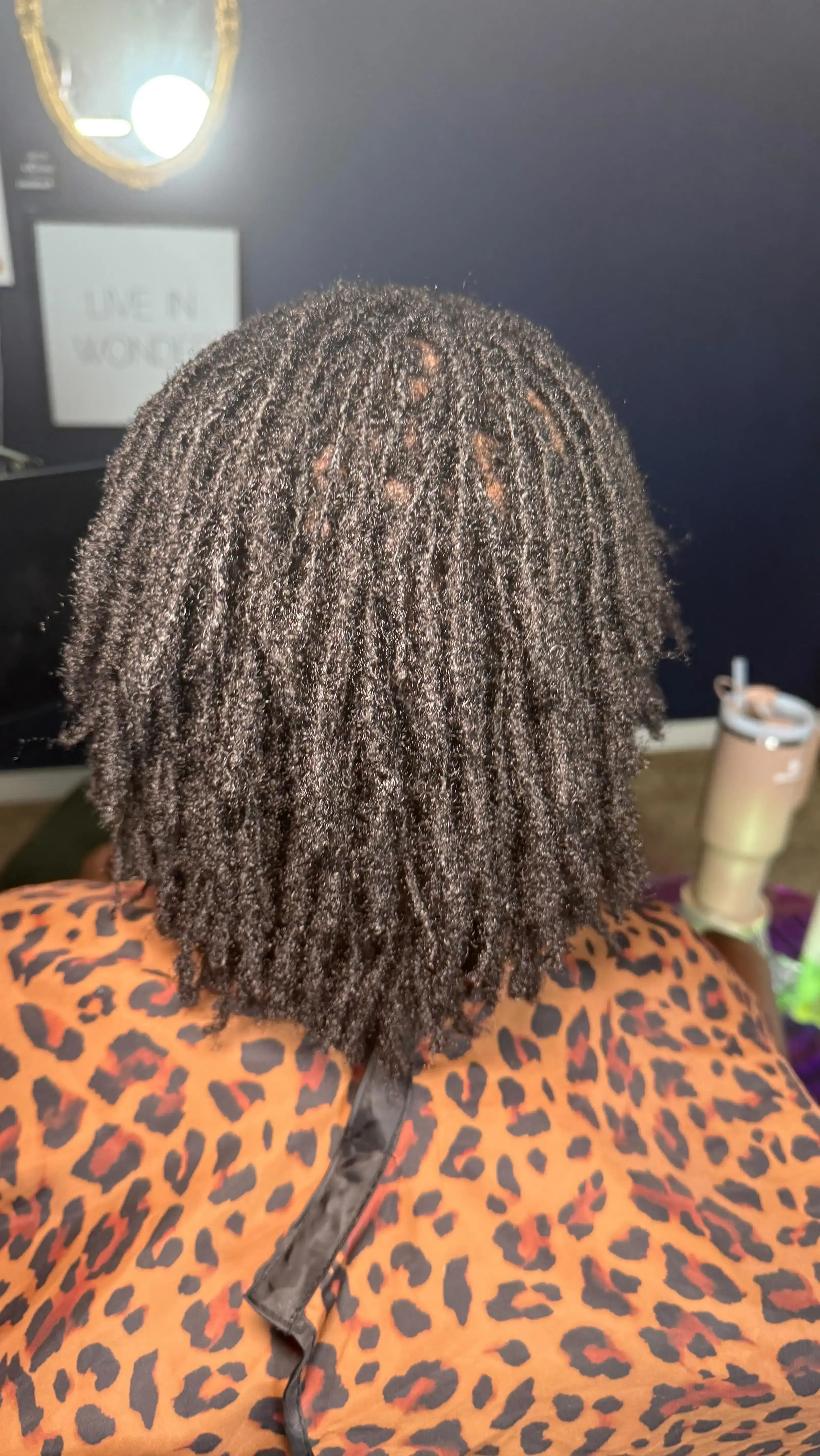
Consultation
Damage assessment & plan
Reconstruction
Strengthening weak points
Aftercare
Regimen for healthy growth
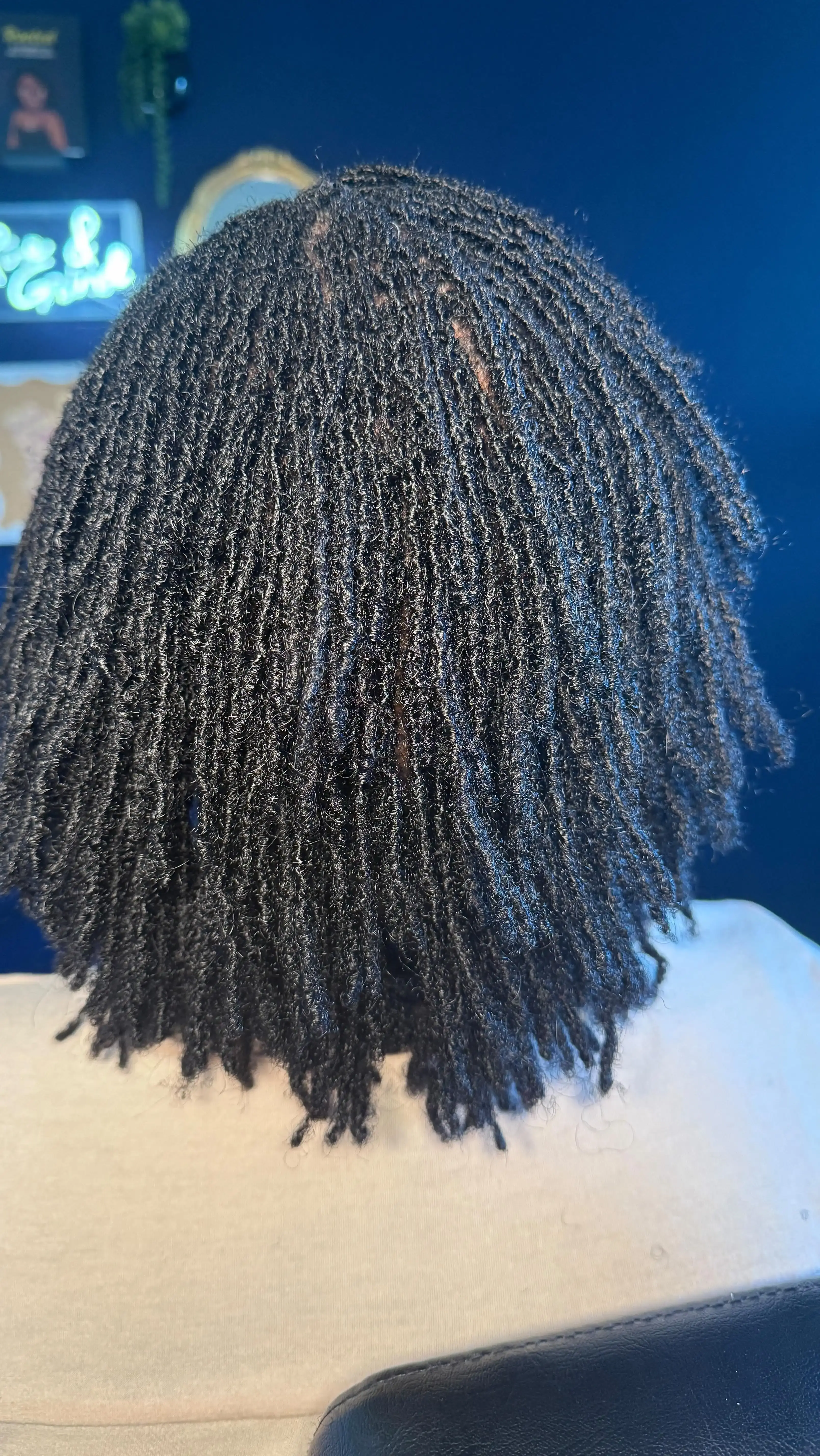
Understanding Loc Damage
Why Do Locs Thin and Break?
Locs are incredibly resilient, but they are not exempt from wear and tear. One of the most common issues clients face in their loc journey is thinning at the roots or along the shaft. This can happen for various structural, environmental, or physiological reasons.
Tension and styling are two leading culprits. Consistently styling the hair too tightly puts massive strain on the follicles at the scalp, leading to traction alopecia and severe thinning at the root base. When the root is weak, it can no longer support the weight of the growing loc, inevitably leading to snapping.
Improper retightening techniques also cause issues. Waiting too long between reties (causing locs to tangle and thin out at the base) or interlocking too tightly can permanently compromise the cylindrical structure of the loc, leaving behind thin gaps or holes in the lock shaft. Furthermore, internal changes such as hormone fluctuations, medication side-effects, and postpartum shedding can cause sudden density loss. No matter the cause, rapid professional intervention is critical.
Do Not Wait
If you notice a loc hanging by a thread or thinning intensely in the middle, wrap it loosely or leave it completely untouched, and schedule a repair consultation immediately. Attempting to DIY fix it can sometimes cause irreparable harm.
The Restoration
Meticulous Reconstruction Techniques
Repairing locs requires the steady hand of an experienced loctician. Our approach to loc restoration relies heavily on precision, using tools and methods that mimic the natural locking process without introducing unnatural, stiff bulges.
Depending on the severity of the damage, we might use a specialized crochet hook method. This involves carefully wrapping and pulling the broken fibers back into a cohesive, solid cylinder. If the damage involves missing hair mass—such as a large thinning gap—we can seamlessly weave in 100% human afro-kinky hair (or your own saved shed natural hair) to bridge the gap and reinforce weak points until your own root grows out strong enough to sustain itself.
For locs that have snapped off entirely, loc reattachment is an incredibly effective service. As long as you have saved the broken locs, we can invisibly splice them back onto your healthy new growth at the root. Clients are often amazed that the point of repair is entirely undetectable once reconstructed by a master stylist.
Every single repair service is completely bespoke. I carefully examine the tension, density, and natural rotation of your unique locks so that the repairs blend flawlessly over time.
Required Consultation Form
Because loc damage is highly individual, an in-person assessment is absolutely mandatory prior to quoting a price for extensive repairs. A $50 consultation fee applies.
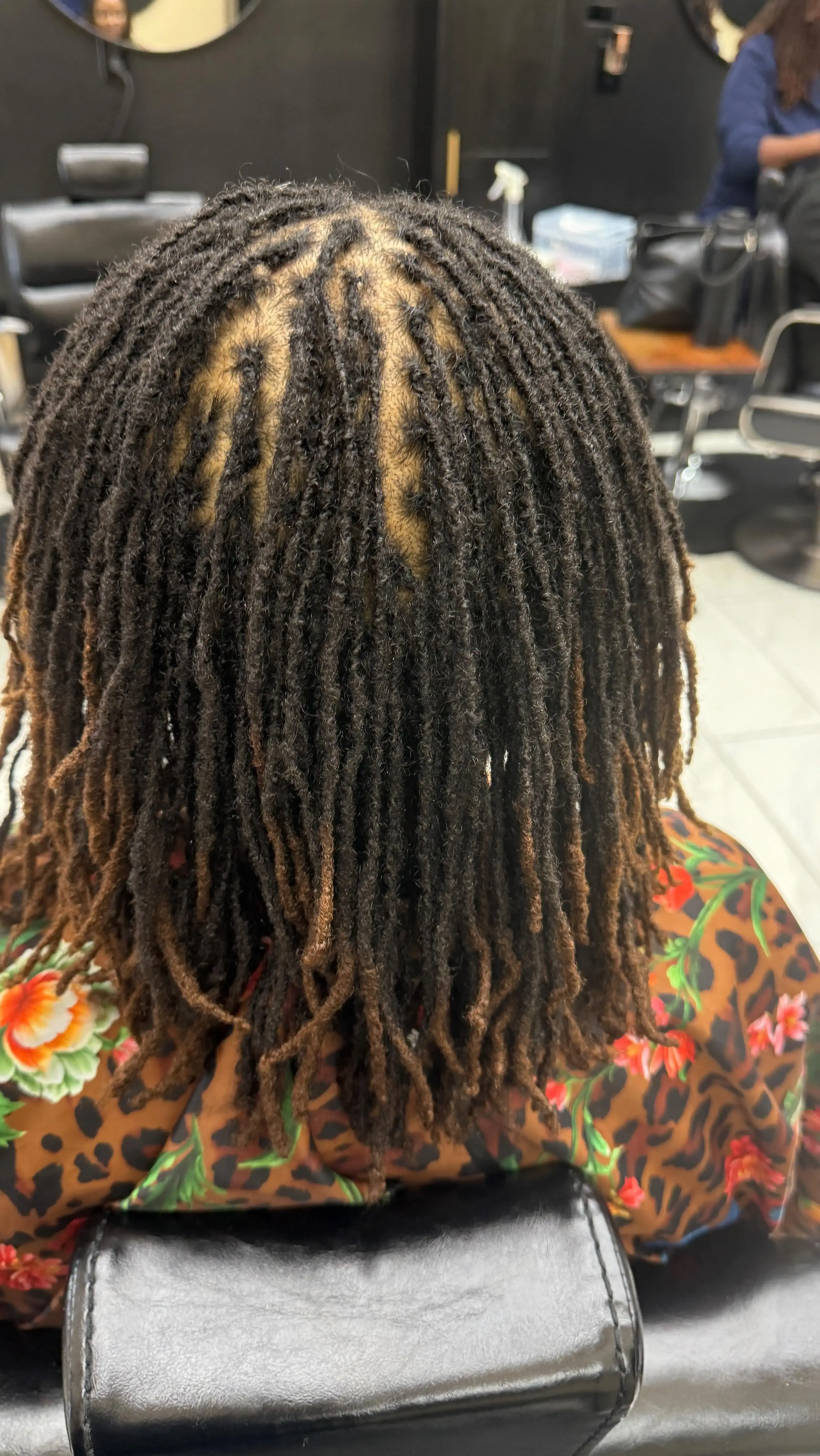
Future Proofing
Protecting Your Locs After Repair
After undergoing loc reconstruction or reattachment, following a strict aftercare routine is vital for maintaining the physical integrity of the repaired segments.
Gentle Washing
Avoid aggressive scrubbing directly over the newly repaired sections. Opt for a gentle massaging technique and consider braiding and banding thin areas during the first few washes.
Zero Tension Styling
Steer clear of high ponytails, tight up-do styles, and tight barrel rolls. Give the repaired roots plenty of time to thicken up before adding any stressful tension.
Strict Re-tie Schedule
Do not exceed your recommended retightening timeframe. Depending on growth, reties are needed every 4 to 8 weeks to prevent matting and recurring weak spots.
See the Difference
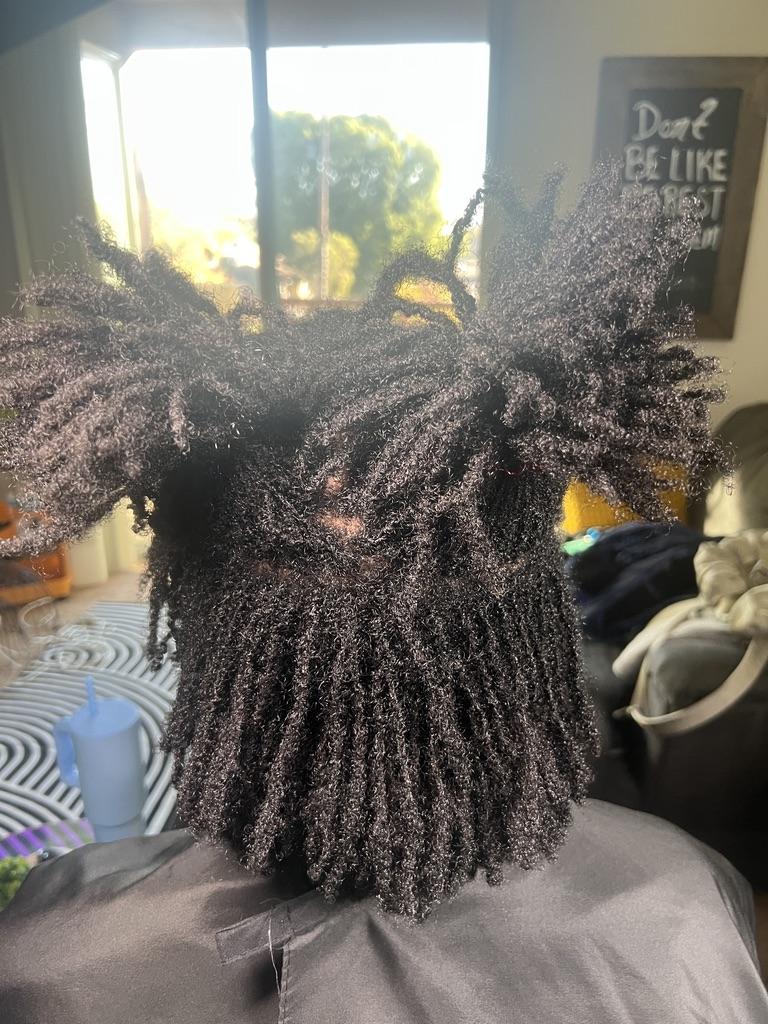
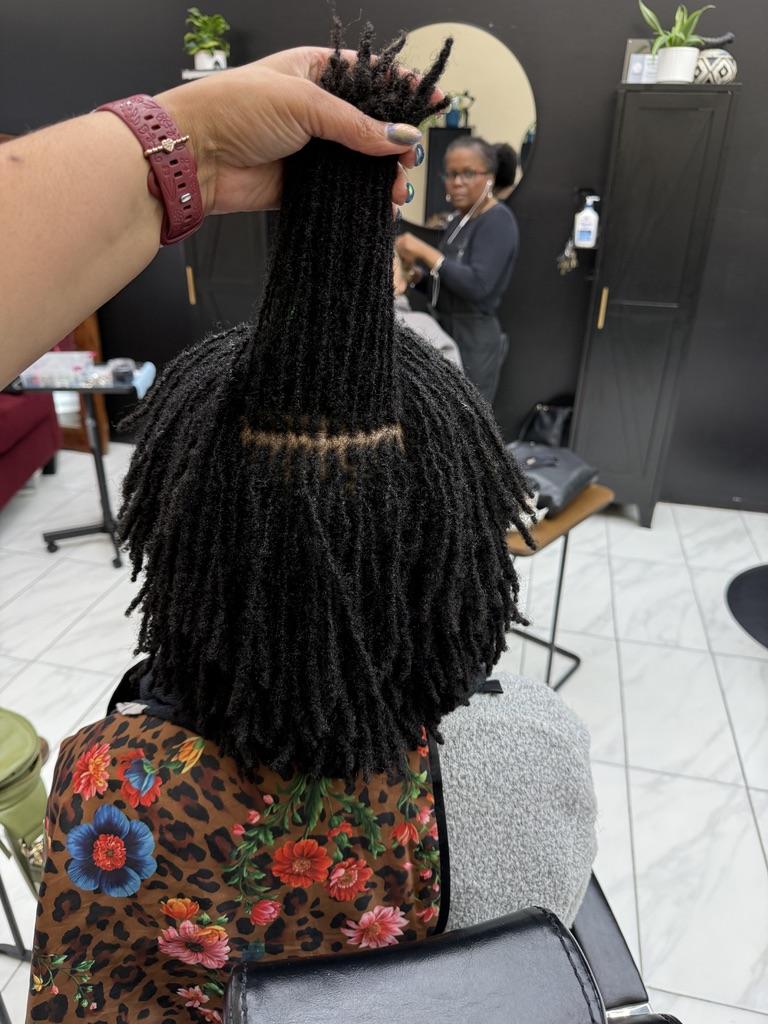
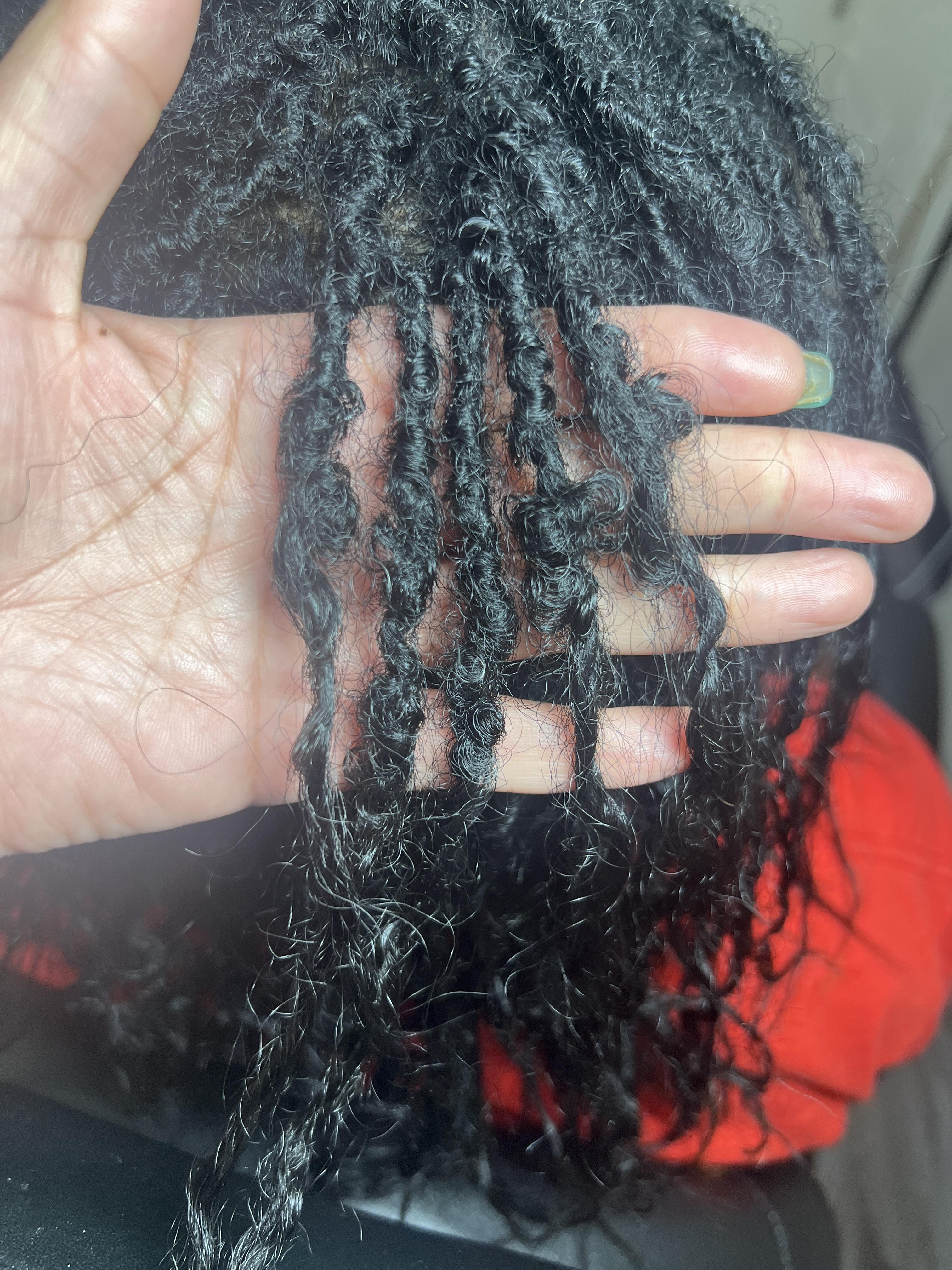
Before & After Repairs
Hole Repair
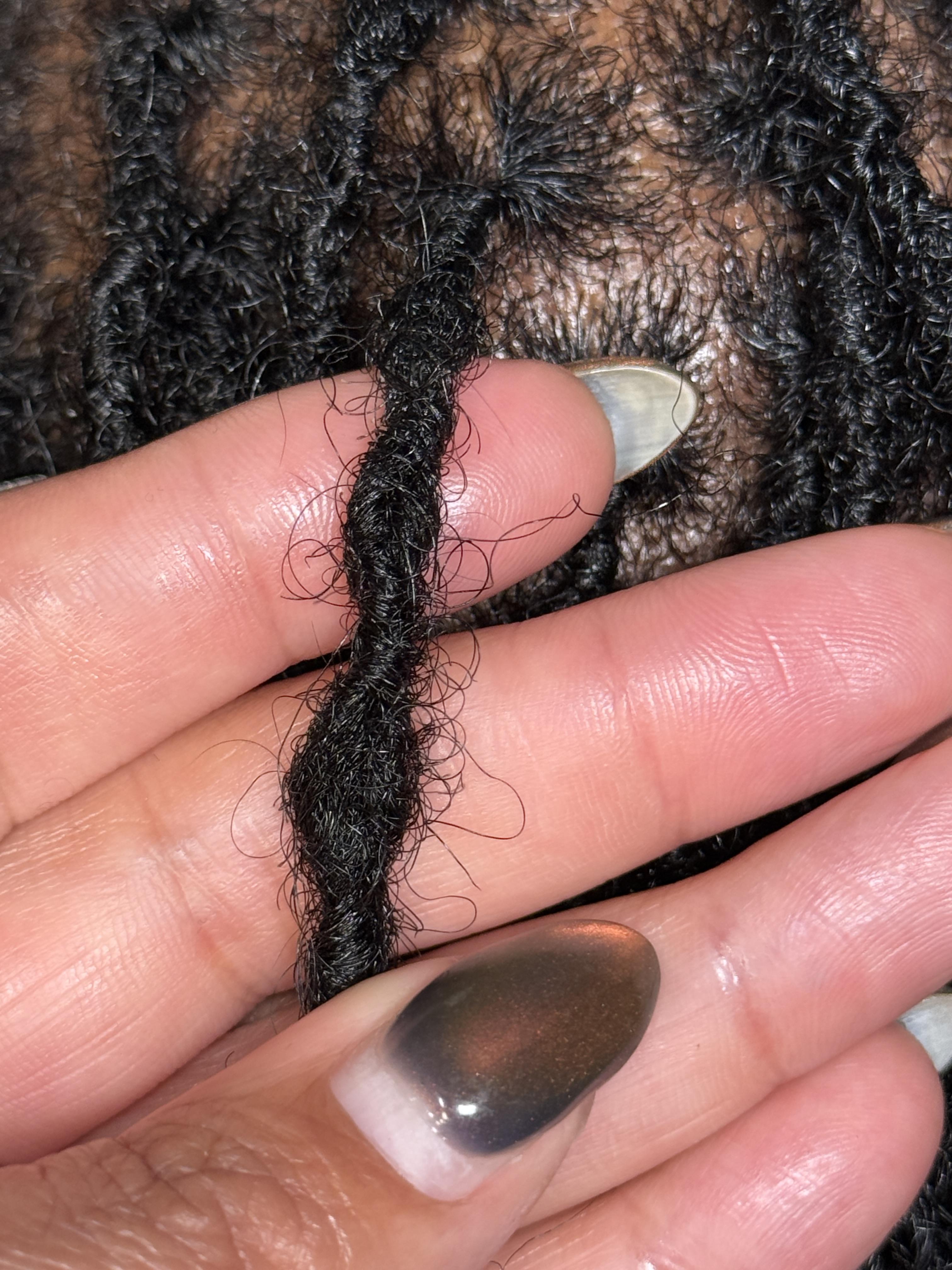
Before
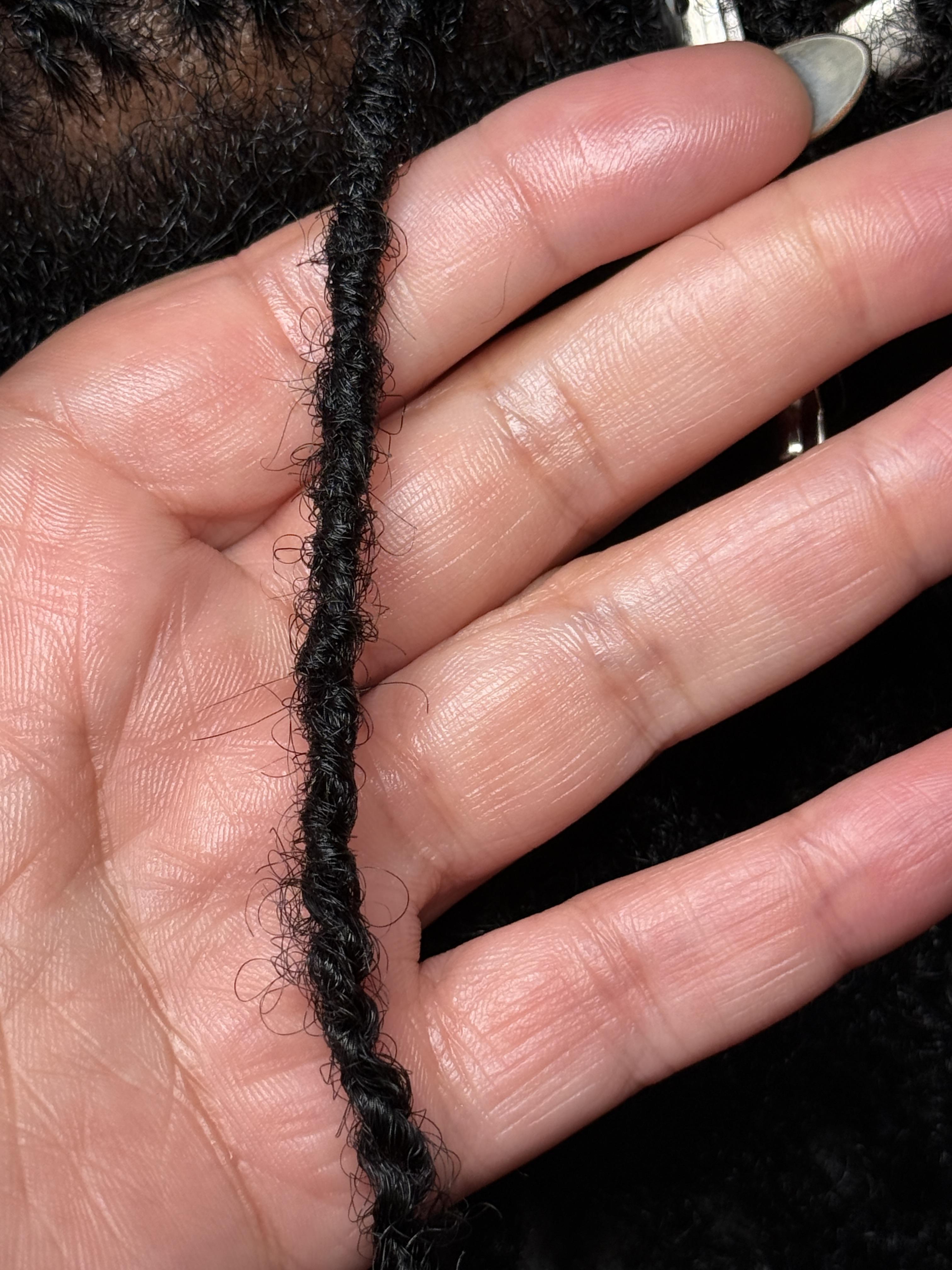
After
Slippage Repair
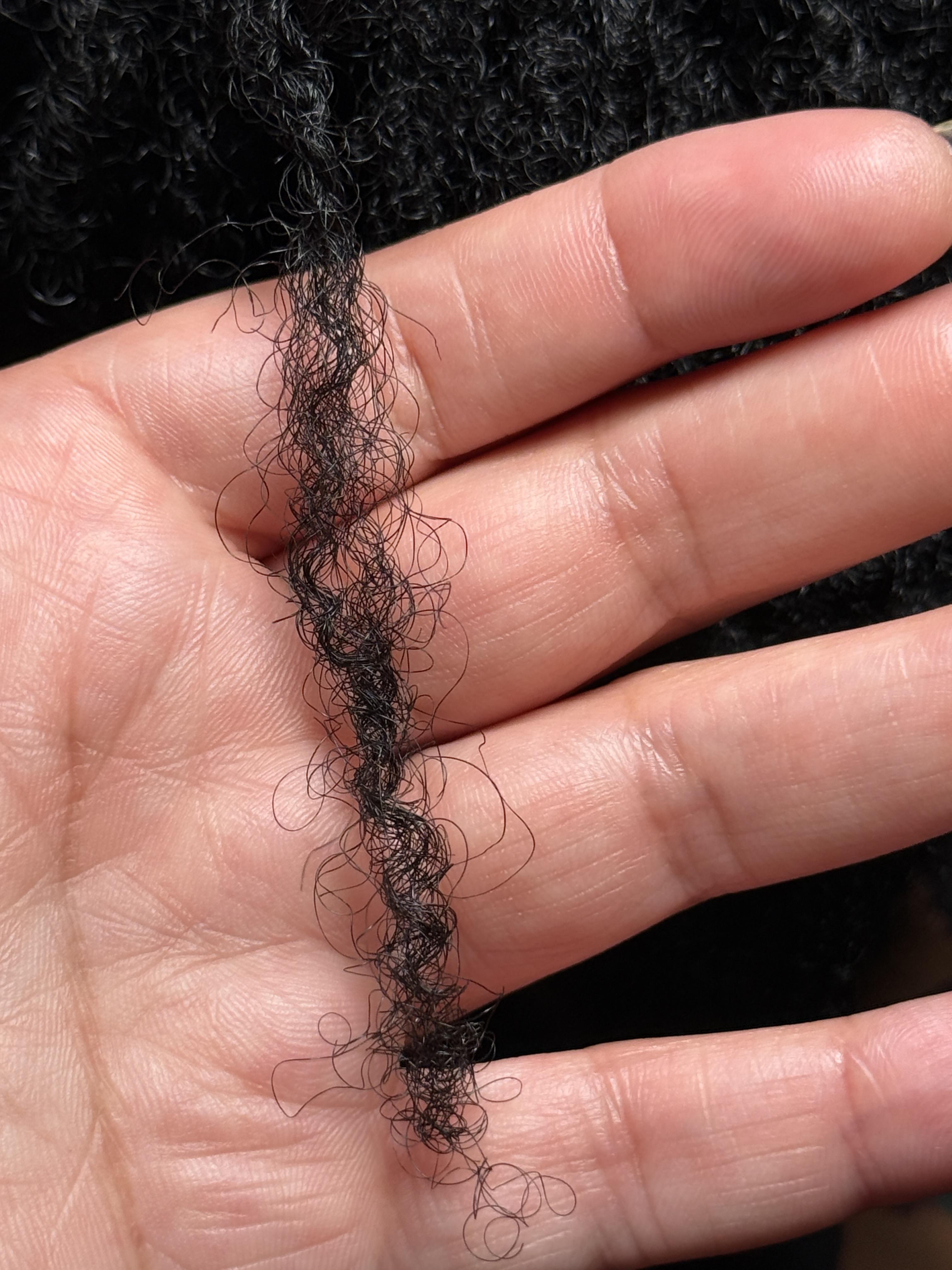
Before
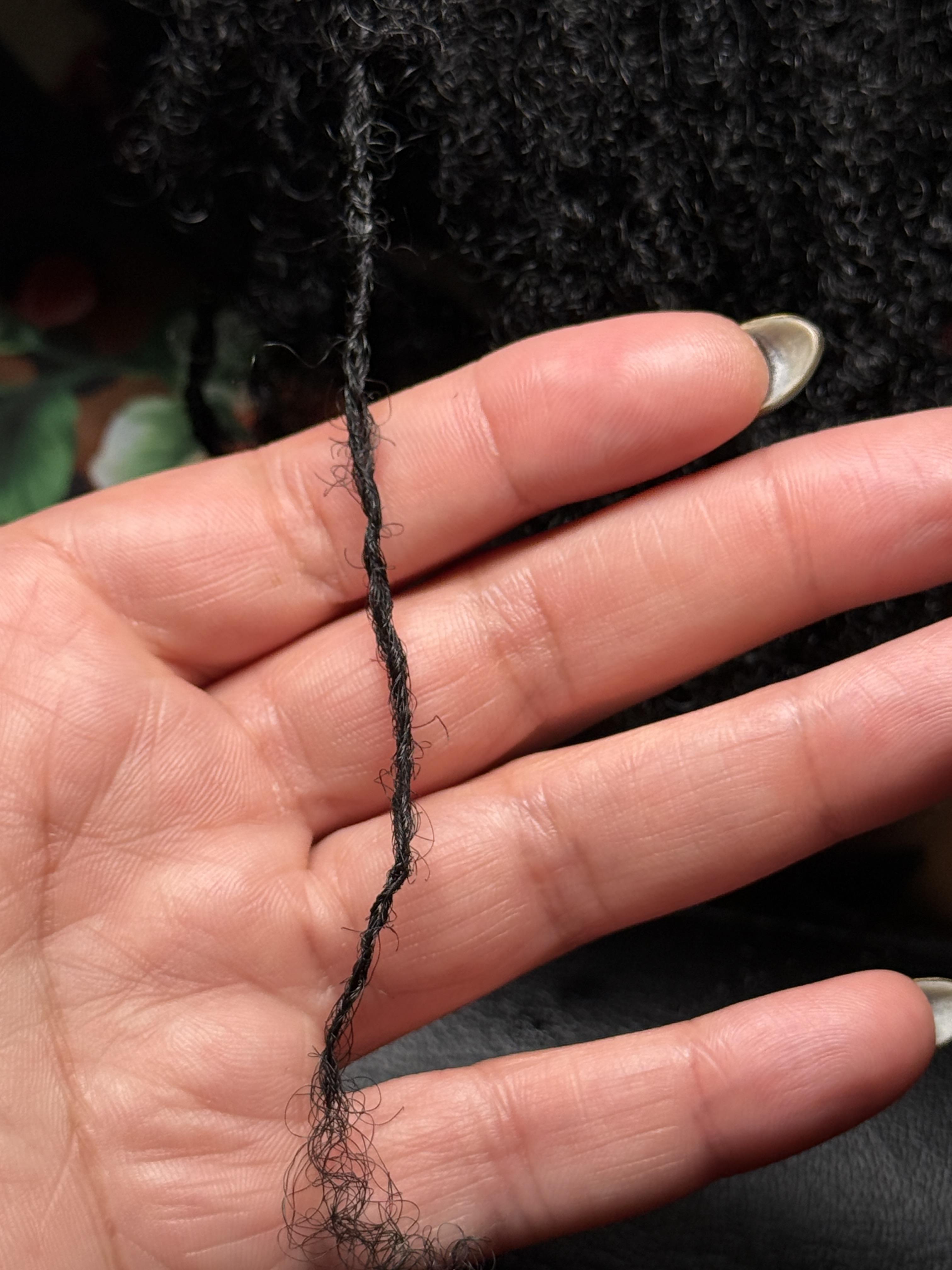
After
Bunching Repair
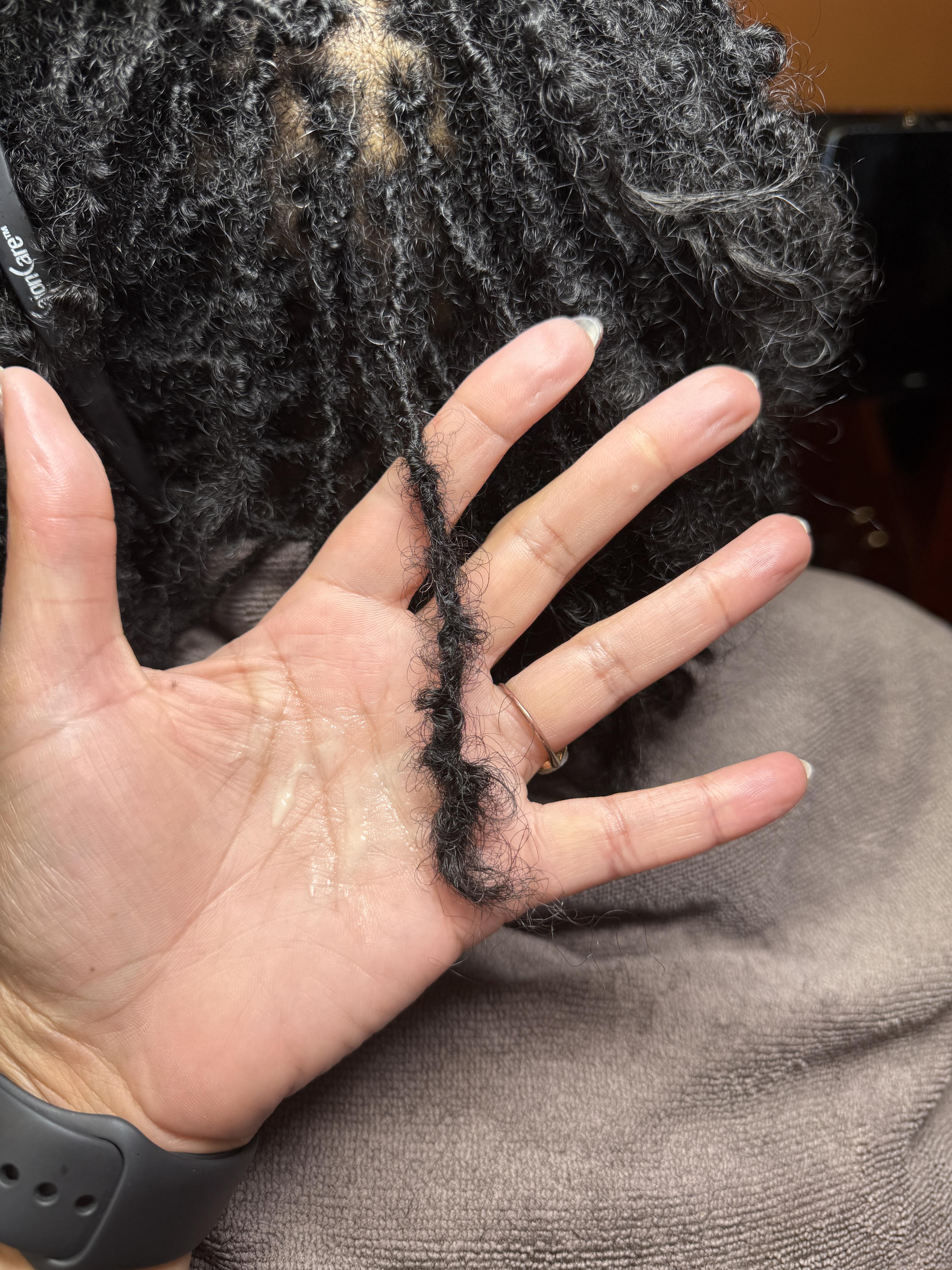
Before
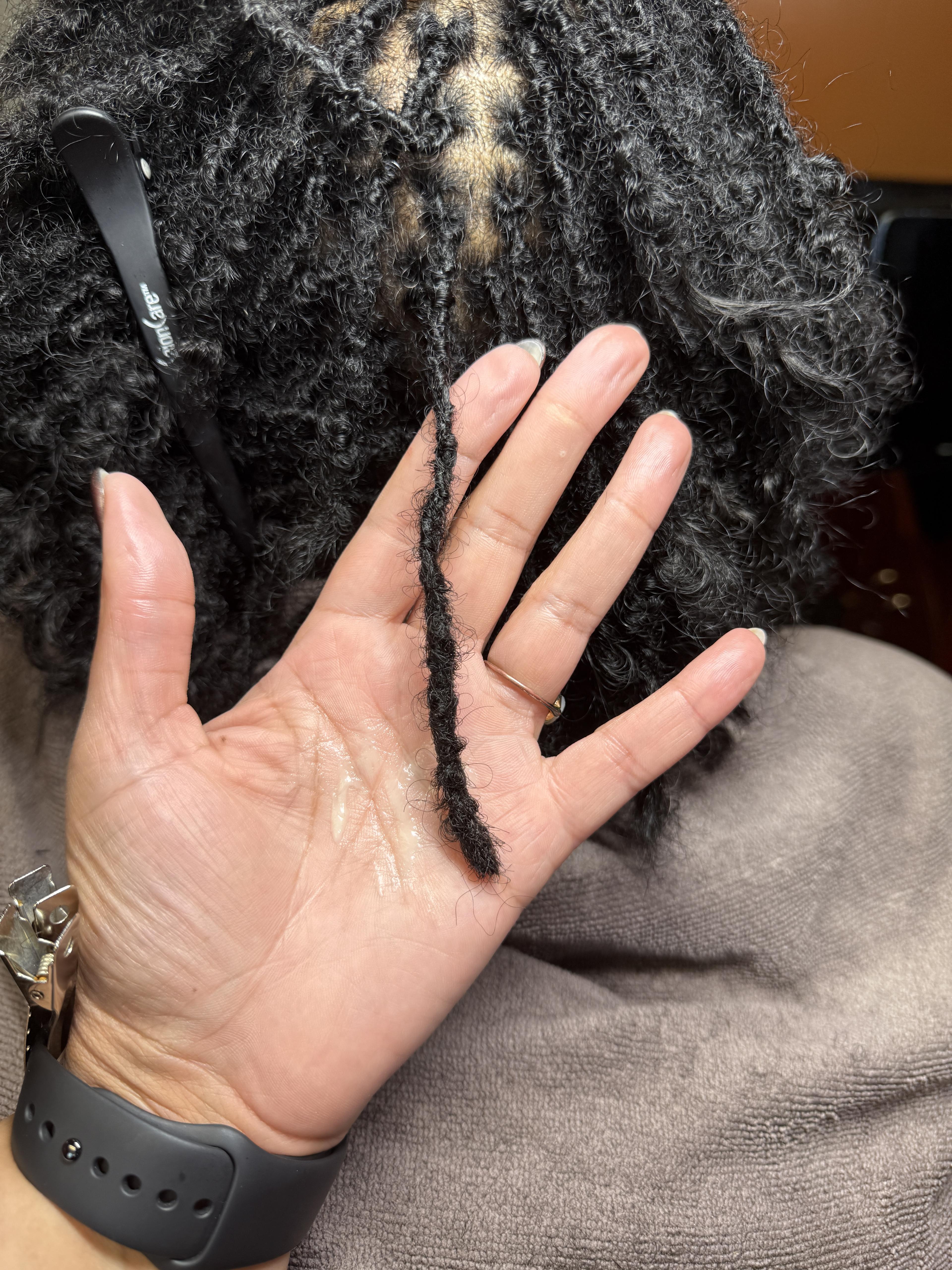
After
Our Specialized Repair Offerings
All repairs are individually quoted based on the severity of the damage and time required. We focus entirely on structural longevity rather than quick fixes.
In-Depth Consultation Assessment
Detailed root-to-tip evaluation to identify weak spots, evaluate density, and define a comprehensive restoration strategy tailored solely to your unique hair matrix.
Crochet & Interlock Consolidation
Expertly combining multiple thinning locs into one stronger, thoroughly reinforced foundational loc using precision crochet techniques, maintaining an organic and aesthetically pleasing look.
Extension Integration for Repair Only
Splicing naturally shed locs or high-quality afro-kinky human hair into severely thinned or weakened spots to bridge gaps, with no adhesives or glues. This is for repairing thinning locs only. We do not add extensions to a full head, to new installs, or to lengthen locs, and clients who add extensions to their locs are removed from our service calendar.
Ready to Recover?
Schedule Your Repair Consultation
Don't wait until a thinned loc snaps off entirely. Secure your loc's future health by booking professional structural repair with Locs By Steph B.
Los Angeles Area
Inglewood, CA
Inside Naturally You Salon
8464 Crenshaw Blvd
Inglewood, CA 90305
48-hour notice to cancel
Join the WaitlistNot accepting new clients at Inglewood right now. Join the waitlist and you'll be contacted when a spot opens. Existing clients, book as usual.
Studio detailsDMV · Montgomery County
Silver Spring, MD
Inside Noire Salon · 2nd Floor
8225 A Georgia Ave
Silver Spring, MD 20910
14-day notice to cancel
Book at Silver SpringStudio details